
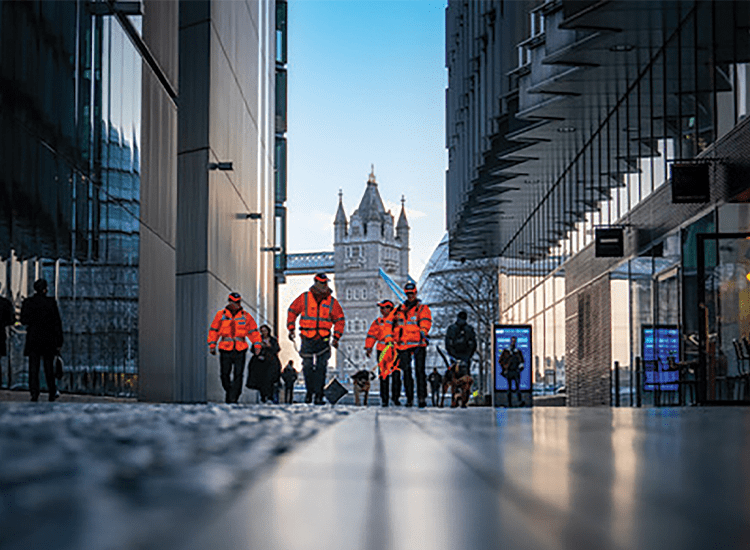
When someone goes missing in the Square Mile
London Search and Rescue works alongside the City of London Police to find high-risk, vulnerable missing people. Here’s what security professionals should know.
More than 50,000 people are reported missing in London each year.
Most are found quickly. But those who aren’t found quickly are often in serious crisis: living with dementia, experiencing a mental health emergency, or at risk of taking their own life.
London Search and Rescue (LonSAR) is a 100% volunteer-led charity that works alongside the Metropolitan Police and City of London Police to search for these individuals, 24 hours a day, seven days a week. In the Square Mile, our partnership with CoLP means we can be deployed anywhere in the City – and increasingly, that means working in and around the Thames corridor, where suicide intervention and prevention are a growing part of what we do.
For security professionals working in the City, this is more relevant than it might initially appear. Security officers are often the first people to notice when something is wrong – someone wandering without purpose, distressed, or behaving in a way that suggests they are not safe. That early observation can be the difference between someone getting help quickly and a situation escalating.
What to look for
People in crisis don’t always look the way you might expect. Someone living with dementia may appear calm but be entirely disoriented. Someone considering ending their life may be quiet, purposeful, and not visibly distressed. Look for people who seem lost in a space they should know, who are dressed inappropriately for the conditions, who are moving towards water, a viewpoint, isolated areas, or who appear to be waiting for something.
What to do
If you’re concerned about someone, engage them calmly and without assumption. Ask if they’re alright. Ask if they know where they’re going. A simple, non-judgemental conversation, with open questions, can open a door. If you believe someone is at immediate risk, follow usual 999 steps. The police will make the risk assessment whether it’s a blue light call or a call for concern.
You don’t need to have all the answers. What matters is that someone pays attention and acts.
How LonSAR fits in
Once the police have assessed a case as high risk and vulnerable, they can deploy us to support the search. Our volunteers are trained not only in search and rescue, but missing person behaviour, mental health first aid, and suicide intervention. We work alongside CoLP, not instead of them.
If you’d like to know more about our work, or how your organisation could support us, visit www.londonsar.com
