
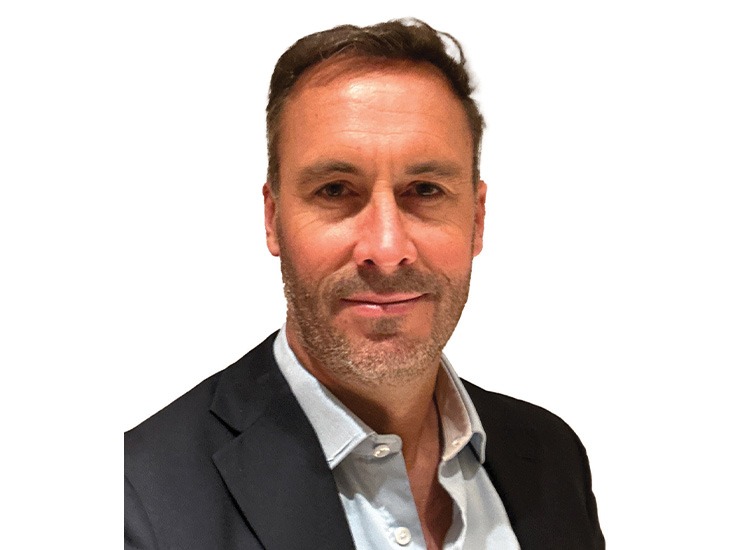
Focus on a Chartered Security Professional: Nigel Sommerville MBE MC
Each issue, we focus on a CSyP to hear about their career journey, any learning they can share and their advice for others thinking about becoming accredited. Here, we meet Nigel Somerville MBE MC.
Q: How did your career in security begin?
A: My journey into security began with a 17-year career as a Royal Marines officer. This military foundation wasn’t initially intended as a pathway to corporate security, but in hindsight, I now realise that it provided the disciplined framework, leadership skills and operational mindset that would prove invaluable in my transition to risk management and security in the corporate world.
Military life instilled in me the importance of meticulous planning, risk assessment, and decisive leadership under pressure. It also afforded me the opportunity to learn how to communicate up, across and down organisational structures. These are all skills that translate directly to managing security challenges in complex business environments.
My first role out of military service was in risk consulting, focused specifically on supporting companies establish business operations in emerging or high-risk markets. This role bridged my military experience with commercial security requirements, allowing me to develop a comprehensive understanding of enterprise-level risk management.
From there, I progressed through a combination of risk consulting, corporate security and business management roles as well as founding my own risk consulting company. I now find myself as the Head of Security across EMEA for Warner Brothers Discovery, where I integrate risk management and security strategy across over 20 countries to support business operations.
Q: What training and qualifications do you have and how useful have they been?
A: My educational foundation began with an MA (Hons) in Business Studies from the University of Edinburgh in 1995, which provided crucial commercial understanding that has underpinned my ability to integrate security with business strategy throughout my career. The MA in Defence and Strategic Studies from King’s College London in 2006 combined strategic risk thinking with operational planning. The Post-Graduate qualification in Security Management from Loughborough University in 2012 bridged traditional security with contemporary business risk management approaches.
The International Certificate in Enterprise Risk Management from the IRM in 2019 was particularly instrumental in commercial terms, enabling me to speak the language of business leaders whilst delivering security solutions. As well as CSyP, I hold several professional qualifications, including CISMP, IRM certification, and Fellowship of the Chartered Management Institute – each contributing to an ability to operate at the intersection of risk, security, and business strategy. My current DV clearance has been essential for certain advisory roles where I’ve advised on national security matters with clear business and economic implications.
Q: Are there any key individuals who have mentored or supported you?
A: Throughout my career, I’ve been fortunate to work alongside exceptional leaders who understood that effective security must align with business objectives. My role as Strategic Security Advisor to government ministers and COBR from 2011 to 2013 provided exposure to senior decision-makers who demonstrated how risk management and security considerations must integrate with economic and political strategies at the highest levels.
Within the corporate world, colleagues across various sectors have influenced my understanding of how security, risk management, and business strategy must work in harmony. The diversity of my roles – from media companies requiring editorial independence protection to financial services consultancy demanding regulatory compliance – has exposed me to different approaches to balancing security investment with business growth.
My experience serving on the UK Executive Committee at Marsh McLellan particularly reinforced how P&L owners must think commercially whilst maintaining operational integrity. Above all, it reinforced the requirement for personal accountability in decision making and business performance.
Q: What made you decide to apply for the Register of Chartered Security Professionals?
A: Professional registration through CSyP represents both credibility and a commitment to maintaining the highest standards across the interconnected disciplines of risk management, security, and business strategy. Given the evolving nature of security threats and the increasing convergence of physical and digital security, I recognised the value of a qualification that covers security in its entirety whilst acknowledging its fundamental role in enabling business success. It is also why is it is so highly regarded by NPSA and NCSC.
The CSyP registration demonstrates commitment to professional standards and ethical practice, which is increasingly important as security professionals take on greater commercial responsibility. It also provides access to a network of like-minded professionals who understand that modern security must be risk-informed and business-aligned, which has been invaluable throughout my progression from military service to board-level commercial positions.
Q: What would you say to others considering applying?
A: I strongly recommend professional registration for anyone serious about advancing their security career. The application process itself is valuable – it requires you to articulate your strategic impact and demonstrate competencies across security knowledge, practical application, communication, and leadership.
My advice for those beginning their CSyP journey is to focus on foundational knowledge whilst seeking diverse practical experience. The security profession rewards those who understand both technical aspects and business requirements. Don’t underestimate the importance of developing strong communication skills – the ability to articulate complex security concepts to senior stakeholders is crucial for career advancement.
Consider pursuing formal education alongside practical experience, seek mentorship opportunities, and remember that security is ultimately about protecting people and enabling business success. The profession is evolving rapidly, so maintain curiosity and embrace continuous learning.
