
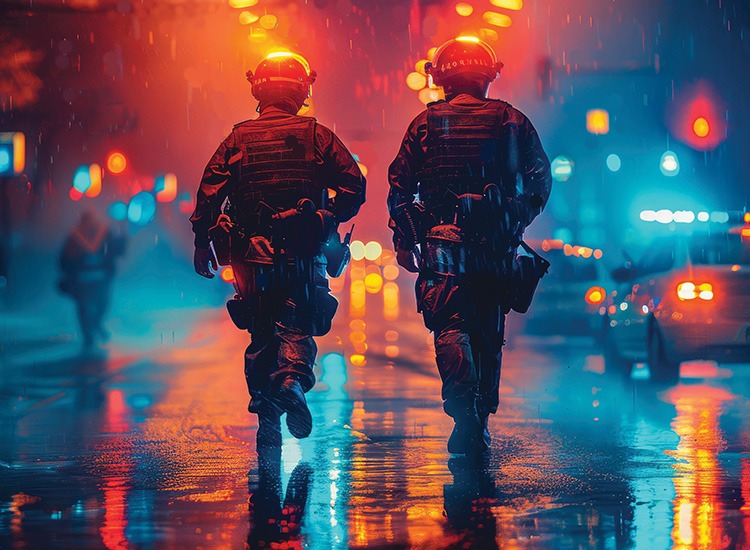
Crisis management & emergency response: developing critical competencies
Developing the critical competencies needed in crisis and emergency management, such as leadership, situational awareness, communication, and adaptability, is essential for navigating today’s complex threat landscape.
Evolving risks
The world we live in is always evolving. From a crisis and risk response point of view, this means new challenges and, as the recent worldwide events have proven, an increasingly volatile global landscape.
War, natural disasters, pandemic recovery, unstable geopolitics, domestic unrest and terrorism – the list goes on and on. The world we live in is hypercomplex and so interconnected that what are seemingly small disruptions have huge impacts on how we live.
Developing competences
Crisis management and emergency response (CMER) have emerged as essential disciplines within security and risk management frameworks. Effective CMER is not just about reacting swiftly but about anticipating, preparing, and responding with skill and coordination.
Developing critical competencies in these areas is vital for professionals tasked with protecting assets, infrastructure, people, and reputations. Furthermore, involvement in institutions such as the Security Institute (UK) and the Institute of Strategic Risk Management (ISRM) provides significant developmental and professional advantages. I include these in this article as I have been involved with them for many years and they are vital for my role, in both research information and access to worldwide expertise.
Understanding the processes
Understanding crisis management and emergency response is a strategic process involving the preparation for, response to, and recovery from events that threaten to harm. From a contract aspect, this is very localised and can feel small in comparison.
However, during any disruption, no matter the type of incident, these impacts feel huge to those dealing and responding to them.
Emergency response, on the other hand, focuses on the tactical execution of immediate actions: the front-line actions that we deploy to manage the emergency. While both of these are distinct, they operate in partnership, not always obvious at the time, but without a strategic plan and outline, our response capability and efficacy is drastically impacted. (That is not to say the best laid plans do not go awry, but without a starting point emergencies response gets worse very quickly.)
In brief, the stages of crisis and emergency response are: Prevention and Preparedness, Response, and Recovery. Fairly obvious, but how you manage these for your own processes will differ greatly across your business and immediate needs.
How to develop the critical competences for crisis and emergency management
Developing the critical competencies in crisis and emergency management needs a level of technical knowledge, soft skills (people management mostly), and leadership attributes. These competencies are outlined below:
Situational Awareness and Risk Assessment: Those responsible for crisis response must be flexible and see past set Standard Operating Procedures (SOPs). During a crisis, you have limited periods of control before the situation changes or evolves and requires a new tack or response process, one perhaps not written down or even thought of before.
Situational awareness involves interpreting available data and information, recognising threats and risks as they emerge (not easy) and identifying vulnerabilities. Effective risk assessment enables the prioritisation of resources and formulation of proportionate responses. These also allow for the collation of pre- and post- mitigation strategies so you know what resources are available to you for the crisis incident.
Decision-making under pressure: Time-critical decisions in high-stress environments demand clarity of thought and confidence. These are not easy and you will make mistakes – some small, some large; however, you need to ensure that these are documented and the NDM ensures the logical process for your decisions as you will be basing these on the available information you have at that time. As long as you are documenting your decisions and following the National Decision Model (NDM) process, do not worry any further at this stage about the post-incident review. Armchair critics may criticise what you are doing to respond in the heat of the moment. Carrying out table tops and as close to real life exercises and drills will help prepare for these. Practise making decisions under duress: stress management and simulated pressure can prepare you to act effectively when time is limited.
Communication skills: Clear, concise, and timely communication is critical during emergencies. Remember ABC (Accurate, Brief and Clear) or KISS (keep it simple, stupid). You are responding under duress and so is your team; this puts everyone in a stressful mindset and it impacts the rational and emotional brain. Responses under duress need to be short and simple; complicated messages and processes under stressful conditions will not be followed. Communication during crisis is vital and will often be the first thing to fail in the crisis response. Make sure you test your comms, and think about the other aspects such as emergency services, internal comms, the media, and the public relations.
Interagency collaboration: How well you work with multiple agencies including police, fire, ambulance, or government departments. Admittedly, there are not enough joint training opportunities but the City Security Council exercise Iron Titon with joint service partners at Cannon Street in March this year was an excellent example. The more you can partner with the 999 services and practise JESIP (Joint Emergency Services Interoperability Programme) principles, the better.
Leadership and Team management: In crisis response this is vital; you will have all manner of people looking to you if you are responsible for the incident management. This is not easy, so if you cannot show confidence, manage diverse teams, and make decisions under pressure, then delegate roles and responsibilities to the available skillsets you have in your team. (Knowing your professional limitations, acknowledging these, and allowing others to assist you in this, is the height of professionalism.) It is vital that you can lead with transparency – a core traits for success.
Business continuity and Resilience planning: This is a simple but hugely important aspect. If you do not operate an ingrained and established Business Continuity Plan (BCP) and a Business Continuity Management System (BCMS), you will not be prepared to respond. This is essential for all organisational resilience.
In closing, crisis management and emergency response are indispensable components of modern security and risk management. Developing critical competencies as outlined in this brief article – leadership, situational awareness, communication, and adaptability – is essential for navigating today’s complex threat landscape.
The professional development, recognition, and support offered by institutions like the Security Institute (UK) and the International Strategic Risk Management (ISRM) are invaluable. They not only foster continuous learning but also connect individuals with a global network of experts, enhancing preparedness, resilience, and strategic capability.
Remember, as the world becomes more interconnected and hypercomplex, the ongoing “wicked” problems we see almost daily will impact the locations we work in across the city and wider afield. We have to be more than security that stops at our front door or perimeter fence.
Understanding the wider implications, seeing the risks and threats, and preparing appropriate responses for our teams through available intelligence, we can turn this into effective response plans. This will increase your own state of readiness and demonstrate the demand for skilled, well-supported professionals in CMER will only continue to grow.
Jon Felix
CIS Security
